

How to Clean Pavers Without Washing Out Joint Sand
A practical starting point for Florida homeowners: identify your joints, choose a suitable cleaning method and know when to stop.
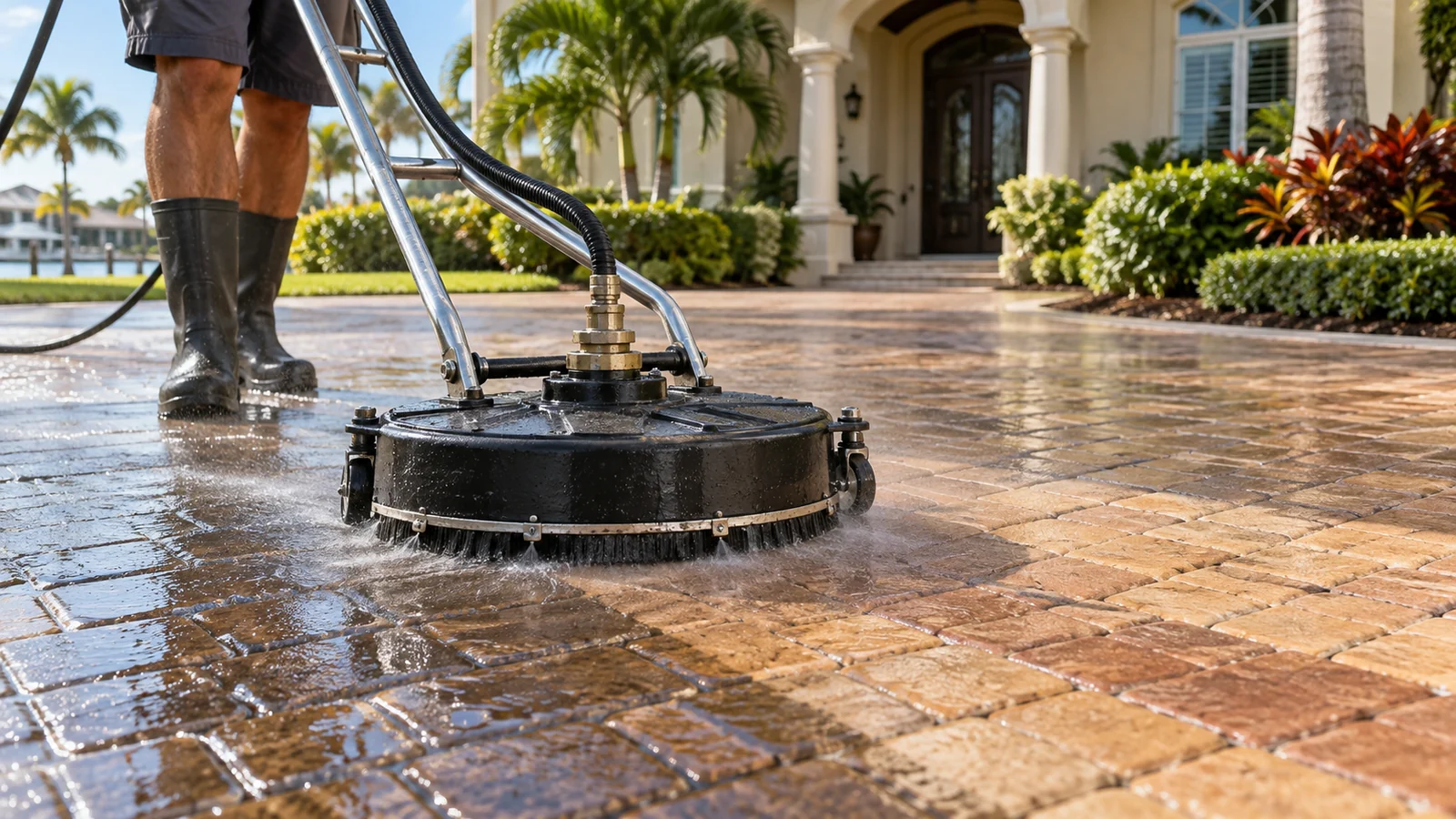
Start with sweeping and gentle cleaning appropriate to the installed pavers and joint material. Concentrated pressure can remove joint sand. There is no universal pressure setting that guarantees every joint will stay intact.
A cleaner patio is a good result only if the cleaning plan also accounts for its joints. Before washing a driveway, walkway or poolside paver area in Tampa Bay or Sarasota, answer two questions: what was installed, and what condition is it in now?
This guide focuses on concrete pavers. If you have natural stone, clay brick or an unidentified surface, obtain its own care instructions before borrowing a concrete-paver method.
1. Identify the joint system first
| What you have | What to confirm before cleaning |
|---|---|
| Conventional sand joints | Ask the installer which joint material belongs in this pavement and how depleted joints should be restored. |
| Polymeric sand | Find the product name and installation date. Follow that product’s cleaning restrictions and curing requirements. |
| Permeable pavers | Use the system’s maintenance guidance. Do not treat the drainage joints as ordinary sand joints. |
In its year-round paver maintenance guidance, the Concrete Masonry & Hardscapes Association (CMHA) warns against polymeric sand and sealers on permeable pavers because they can obstruct infiltration. If the installation type is uncertain, ask the installer before adding any joint material.
2. Start with routine care
CMHA recommends regularly removing leaves and debris. Its technical bulletin on cleaning concrete pavement also describes hand cleaning with suitable products, scrubbing and a garden hose for smaller areas. Use a cleaner specified for the surface, test it in an inconspicuous spot and follow its label.
Avoid steel-bristle brushes: CMHA notes that shed metal bristles can rust and stain the pavement. Its bulletin recommends addressing stains before general cleaning and checking where rinse water will flow.
Make a short list of the areas you want to improve: general dirt, individual stains, loose joints or an uneven section. Take a wide photo and close-ups. This gives an installer or cleaning contractor a clearer question than “Can you wash the driveway?”
3. Treat pressure washing as a separate decision
CMHA cautions that concentrated pressure can damage the paver face and eject joint sand. A wide spray and lower setting can reduce that risk, but they do not establish a safe recipe for every pavement.
The association’s technical bulletin explains that nozzle choice, working distance and spray angle affect cleaning. It emphasizes water volume for rinsing rather than simply increasing pressure. A PSI figure by itself leaves those variables—and the installed material—unanswered.
Before using equipment, consult both its instructions and the paver and joint-product guidance. If the method is not clearly suitable, choose a different approach or request an assessment. For a service visit, ask how the contractor will protect the joints and what happens if existing sand loss becomes visible.
4. Check restrictions on recently installed polymeric sand
“Polymeric sand” is not one universal product with one waiting period. For example, Techniseal’s SMARTSAND technical data sheet restricts high-pressure cleaning devices during the first 30 days and cautions that direct, forceful jets can alter the joints.
That is a SMARTSAND requirement, not a rule for every brand. Check the current instructions for the actual product installed at your property. If you cannot identify it, contact the installer before pressure washing or planning replacement material.
5. Inspect the result before planning more work
Look for depleted joints, cracked or shifted pavers and loose edge restraints—conditions included in CMHA’s maintenance checklist. Stop and get advice when the condition raises a repair question.
Before booking paver cleaning, use this scope checklist:
- Which areas are included, and which individual stains need assessment?
- Who will identify the pavers, joint material and any existing coating?
- Does the quote include any joint restoration, or only surface cleaning?
- If repairs are needed, who will handle them and in what order?
- Which product instructions will guide any follow-up work?
These are questions to agree in advance, not promises that every cleaning service includes repair or re-sanding. For a poolside project, ask for the pool deck cleaning scope separately from the enclosure. Our Florida pool cage care guide covers the surrounding screening.
Frequently asked questions
Can I guarantee no joint sand will come out?
No blanket method can promise that for an unidentified installation. Inspect the joints, follow the installed products’ guidance and agree on how any existing depletion will be handled.
Is a higher PSI the answer to stubborn marks?
Do not use a stubborn mark as the reason to keep increasing pressure. Identify the stain and check the paver manufacturer’s cleaning guidance before changing the method.
Can I replace missing material with any bag of sand?
Confirm the material specified for your installation first. Permeable systems need their own maintenance approach; polymeric products also have individual requirements.
What should I send when asking for help?
Send the property location, overview and close-up photos, the product or installer information you have, and a list of the areas you want included.
Plan your paver cleaning
Share your property location and photos with Admirals Power Washing to discuss cleaning in Tampa Bay or Sarasota.
Discuss Your PropertySources & product guidance
- CMHA: Cleaning, Sealing and Joint Sand Stabilization of Interlocking Concrete Pavement
- CMHA: Hardscaping for All Seasons
- Techniseal: SMARTSAND technical data sheet — product-specific restrictions.
Prepared October 12, 2026. Use the current instructions for your installed materials; site conditions and product requirements determine the method.